
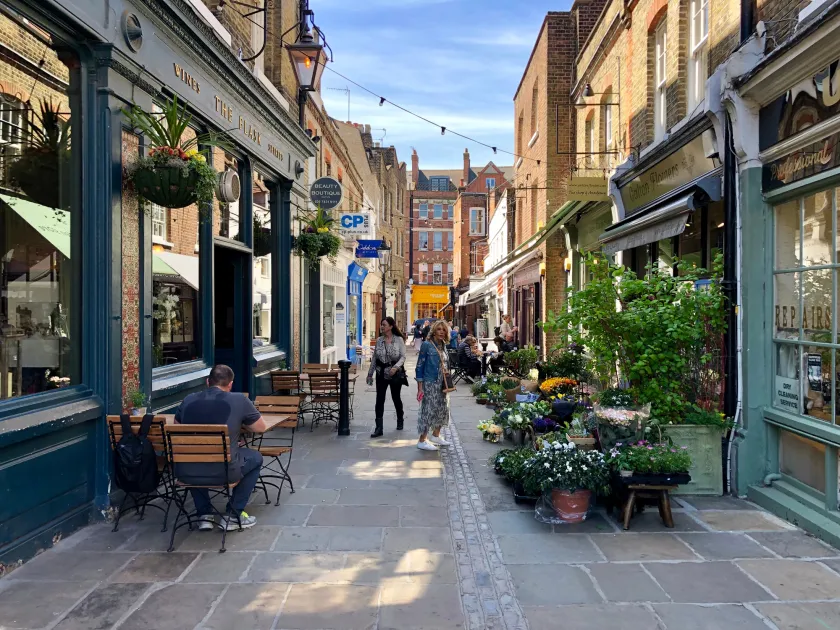
The properties we sell in these streets do not come up often, and the good ones rarely sit around. Most of what makes a purchase go smoothly happens before you find the house — being registered, being funded, and being ready to move when something right appears.
Registering with us costs nothing and is not a commitment. It means you hear about an instruction when it comes in, rather than when it reaches the portals.
How buying works
01
Register with us
Tell us what you are looking for — area, budget, bedrooms, and the things that genuinely matter to you. The more specific you are, the more useful we can be. We do not send everything to everybody.
02
Sort your funding
A mortgage in principle tells you what you can realistically borrow and tells a seller you are serious. It is not a guarantee, but an offer from a buyer who has one carries considerably more weight than one who does not.
03
Viewings
Accompanied by someone who knows the property and the street. Ask us the awkward questions — why the seller is moving, how long it has been on, what the neighbours are like. We would rather tell you now than have a sale fall through in week eight.
04
Making an offer
We put your offer to the seller with your position alongside it: your funding, your chain, and your timescale. Being chain-free or mortgage-ready is often worth more to a seller than a few thousand pounds on the price.
05
Conveyancing and survey
Your solicitor runs the searches — local authority, drainage and water, environmental — while you commission whatever level of survey the property warrants. This is the stage that takes the longest, and the one where a responsive solicitor makes the most difference.
06
Exchange and completion
At exchange the sale becomes legally binding and a completion date is fixed. On completion the money moves, the keys are released, and your solicitor deals with the stamp duty return within 14 days.
-
You hear about it first
Our register goes out before instructions reach Rightmove and Zoopla. In streets that come up once a year, that matters. -
Straight answers at viewings
How long it has been on, why the seller is moving, what the survey is likely to flag. You will find all of it out eventually — better now. -
We know these streets
The same eight areas, year in and year out — including which roads flood, which are on the school catchment edge, and which look quiet until the school run. -
A sensible offer, well presented
We put your case to the seller properly, because a purchase that completes is worth more to everyone than one that falls over.
Common questions
Frequently asked
No. Registering is free and commits you to nothing — it simply means we know what you are looking for and can tell you when something matches.
Most lenders look for at least 5–10% of the purchase price, and a larger deposit generally unlocks better interest rates by lowering the loan-to-value ratio. Your mortgage adviser will give you a figure specific to your circumstances.
Stamp Duty Land Tax above the threshold, solicitor and conveyancing fees, a survey, and removals. Our stamp duty calculator will give you that first figure instantly.
No. In England and Wales neither side is legally committed until contracts are exchanged, which is why sales can still fall through after an offer is accepted. Getting to exchange promptly is the best protection for both parties.
Worth reading next
Doing something else?